
CHALLENGE
Design an app for synchronous, co-located users that encourages socialization between users
SOLUTION
Connect users with their representatives and fellow constituents at town hall meetings to facilitate productive discussions about divisive issues
ROLE
User research, user flow, user testing, UX design
TOOLS
Figma, Google Forms, Google Sheets
Design Process

EMPATHIZE
Understanding the problem space
I first completed a competitive analysis of various platforms to better understand what the current problem space offers and what it lacks. When it comes to political discussions online, I noticed that most platforms focus on connecting like-minded people, encouraging the growth of echo chambers and homophily. If people are able to break out of these echo chambers and engage with people from the other side of the political spectrum, discussions often spiral out of control, especially with the ability to hide behind a screen. Furthermore, while some platforms assist in hosting virtual town hall meetings, they do not encourage open discussion between attendees and council members.
.png)
Now if we take these interactions offline and discuss issues in person, it’s still easy to gravitate towards like-minded people. Our team took this as an opportunity to break people out of their natural habits and connect them with strangers to broaden their perspective and remind them that while we may all hold different beliefs, at the end of the day we are all still humans part of the same community.
Understanding the user
We divided our user base into two major groups: constituents and council members. To better understand each user base, I attended and observed town hall meetings, interviewed participants, and surveyed people online. I found that people on both sides tend to feel a disconnect between constituents and council members; council members found it difficult to reach out to constituents and constituents felt as though their voice did not matter to the council members. Additionally, out of 74 people surveyed online, only 8.1% of respondents were comfortable with voicing their opinion in a group of over ten people, suggesting that most would feel uncomfortable actively participating in a large town hall meeting. Moreover, 45.9% of respondents were uncomfortable with sharing their opinions on controversial issues with strangers.
DEFINE & IDEATE
Defining the problems
Between the problem space and the user base, I found that there were two overarching themes revealed through extensive research:
-
In collective discussions that have a political or ideological undertone (i.e. town halls, caucuses, council meetings), there is often a wide range of opinions amongst attendees
-
People often tend to practice groupthink and communicate with those who hold similar opinions
Because of the synchronous and co-located nature of participants within town halls, there lies a great opportunity to create an environment that balances the comfort of talking in small groups with the discomfort of exchanging views on divisive topics. Real Talk would encourage discussions between people with different backgrounds and perspectives to create more meaningful conversations, and give council members a chance to connect with and better understand their constituents.
Solution ideation
Our first prototype addressed these needs by allowing users to rank issues that would be addressed in the town hall meeting by perceived importance, vote in real-time on these issues, identify their discussion groups, and privately message council members.
By ranking issues at the beginning of the meeting, council members and constituents alike are able to see which issues are the most important to the community and require the most time and attention. The first round of voting on issues then allows Real Talk to group individuals with other constituents who do not share the same stance as them in order to create diverse discussion groups. Because both people and policies are complex, we did not want to use a hard yay or nay voting system. Instead, Real Talk uses a spectrum ranging from 'Strongly disagree' to 'Strongly agree' to highlight these complexities and create a space for people who are not pulled to either extreme. Everyone will then have a conversation about the issue at hand with their group members before giving their final vote. The private messaging feature allows constituents who may not feel comfortable speaking up in front of others to directly contact a council member about the issue.
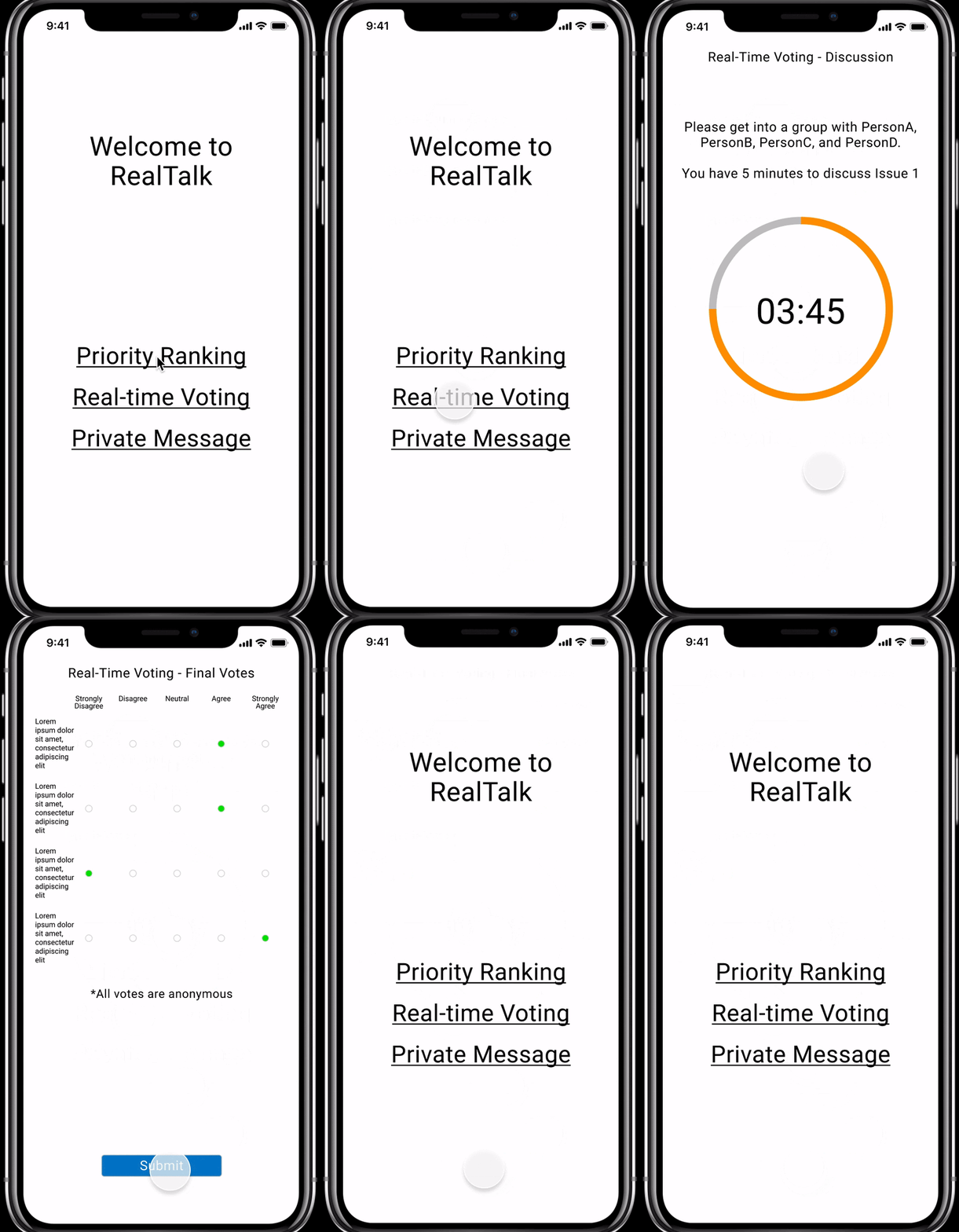
Based on user feedback we received in brainstorming sessions, we tweaked and added new elements to better complement the natural flow of town hall meetings. Before group discussions take place, users are prompted with a quick icebreaker to get to know their group members a little better. If members can establish common ground and respect before diving into divisive discussions, they may be more comfortable speaking up and can possibly empathize better with someone who holds an opposing viewpoint. We also added a feature that allows constituents to sign up to speak in front of the entire meeting after group discussions take place. We altered the purpose of the private messaging feature to address both individual and group needs. The feature is available after group discussions finish so users can anonymously send a question or concern for the council members to read aloud during the open forum session where constituents can speak up.
We created an updated version of the user flow, splitting the interactions up into two stages: onboarding and meeting time. The circled steps indicate screens that require user action.

PROTOTYPE & TEST
Testing the piggyback prototype
We mimicked a town hall meeting with 50 participants to test the user flow. Since we wanted to save time and resources, we used piggyback prototyping with Google Sheets rather than developing a traditional prototype. Google Sheets allowed us to mimic the features and user flow, while displaying live updates to reflect the way users were interacting and voting on issues.

Screen 1. To begin the meeting users select the issue they believe is the most important and requires the most time and attention to discuss. This helps set the agenda and informs the council of what their constituents value. Note the vote counts exceed 50 due to interactions made post-prototyping session.

Screen 2. Next, users vote on the issue at hand and are assigned a group denoted by color. Groups are assigned based on vote to ensure that a range of opinions is represented in each group. Before diving into discussion, though, constituents participate in an icebreaker to get to know their fellow group members better. The icebreaker ideally serves as a way to establish common ground and get participants more comfortable speaking with each other before they discuss a polarizing issue. In the final prototype they will only see their own vote and group assignment. Constituent names are omitted for privacy.


Screen 3. After group discussions end, users have the opportunity to sign up to speak in front of everyone in an open forum portion of the meeting. If they are uncomfortable with public speaking but still want to have their voice heard or question answered, they can privately message council members. Names are again omitted for privacy.

Screen 4. Constituents cast their final vote after the open forum portion ends. Constituents and council members are able to see how votes are split, letting council members determine how they should enforce or veto a policy in order to best serve their community. Note the vote counts exceed 50 again due to interactions made post-prototyping session.
Overall, the flow of Real Talk worked well with users and encouraged productive discussions to take place. However, users were confused about what to expect from the meeting as well as the purpose of the icebreaker. They were also confused about how groups were assigned.
High-fidelity prototype
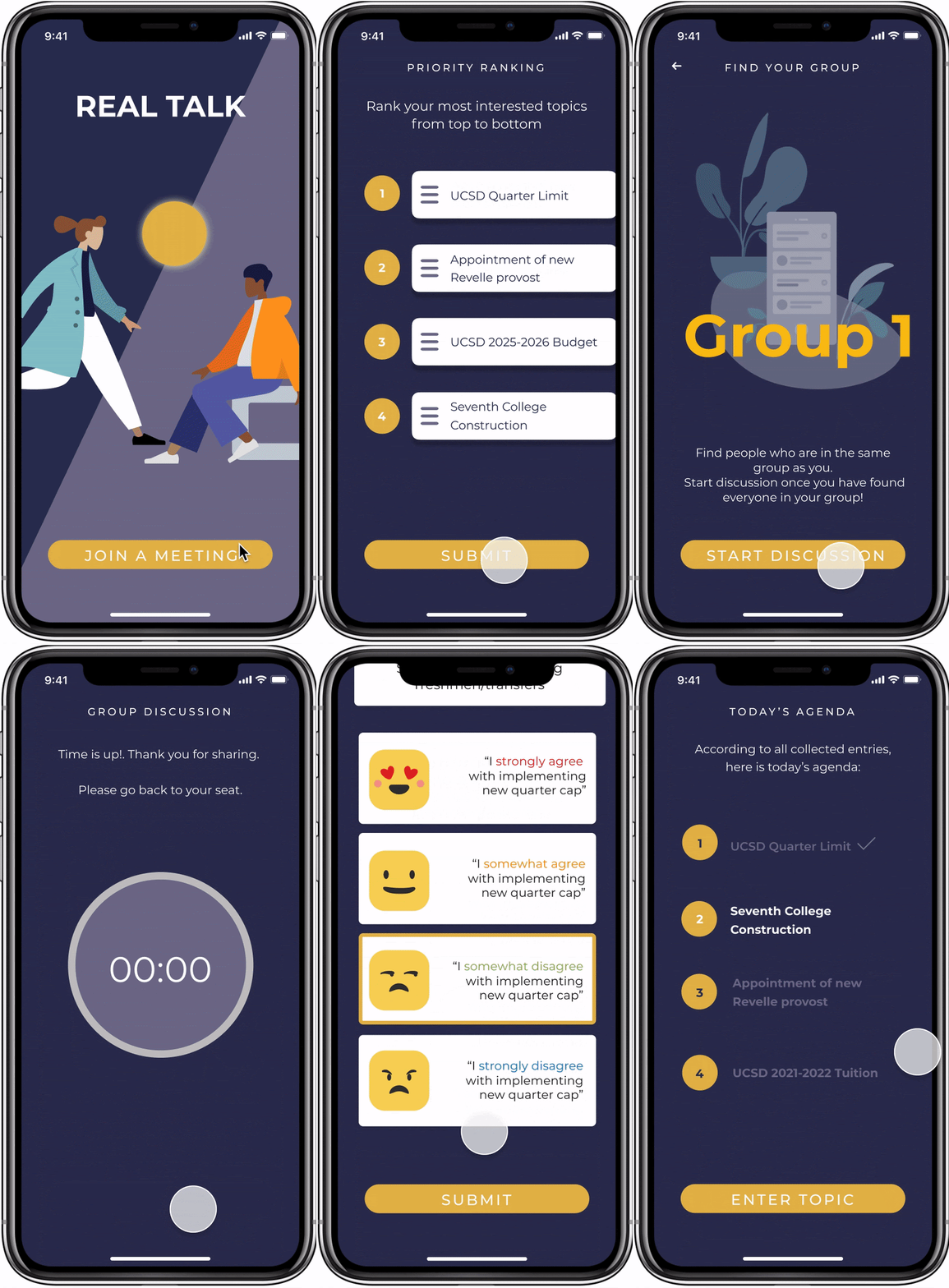
In order to address the weaknesses identified in the prototyping session, we added more small features, improving the clarity of instructions and purposes. In our final high-fidelity prototype we implemented:
-
a validation key for town hall attendees to enter
-
an agenda of discussion topics (the order of which is determined by participants)
-
a list of community guidelines
-
a forewarning that the group will consist of a range of opinions
-
a notification that an individual is casting their final vote
Together, these new implementations serve to streamline the process of setting the agenda for the town hall meeting and preparing constituents for active participation.


The final user flow complements the natural course of a town hall meeting. After entering the meeting validation code and agreeing to community guidelines, users input their topic ratings then cast their initial votes about the topic at hand. Real Talk will then place them into a discussion group with people who voted differently from them. Within these groups, users complete an icebreaker to get to know each other as humans first then delve into discussions. Through the app, users can volunteer to speak in front of the council members or send the council members anonymous questions and statements.
Final takeaways
Real Talk creates a safe space for individuals to speak up in environments they may feel intimidated by. It guides productive conversations and encourages users to see issues from another point of view. With Real Talk, everyone is given a voice and an opportunity to speak up.
Working on Real Talk challenged me to think outside the box and find creative ways to overcome time and resource constraints. I learned that prototypes can come in all different forms, and piggyback prototyping with something as simple as Google Sheets can be incredibly helpful for testing user flows and interactions.